Work
Engines built around how your business runs
Each engine is built around how your business runs, and around the standards your contracts are measured against.
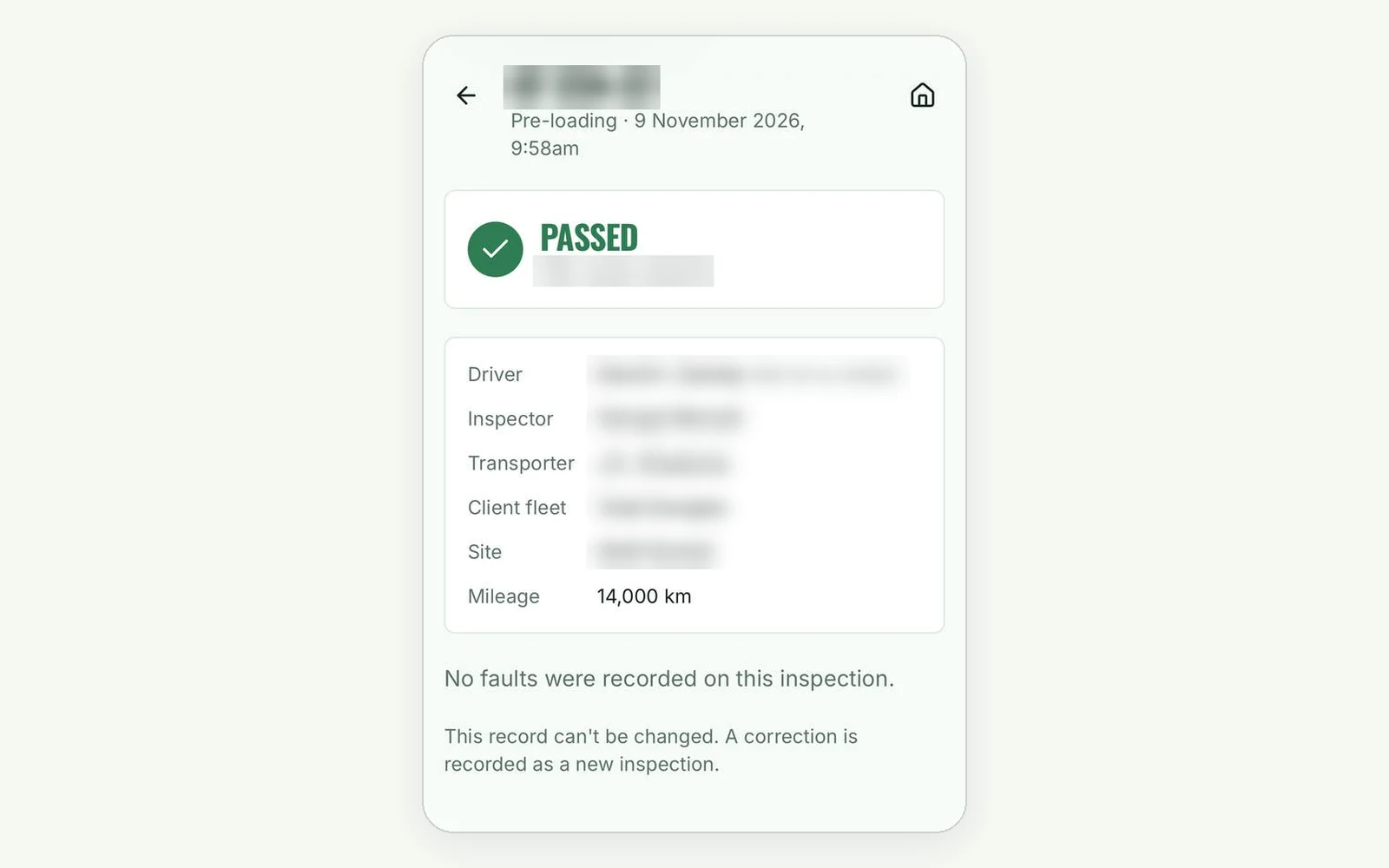
Catch equipment problems early, and keep a health record for every asset.
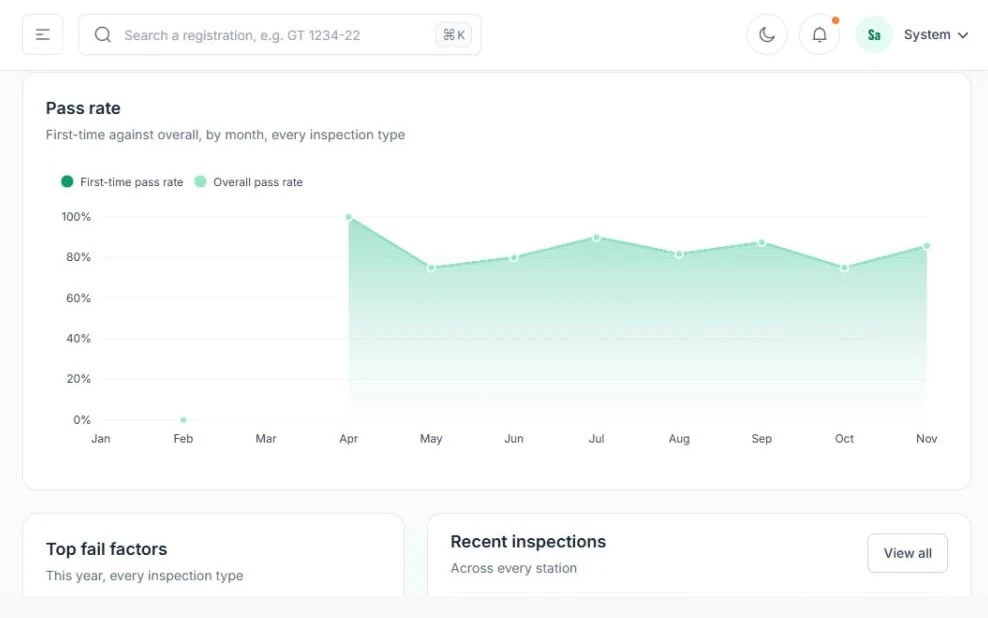
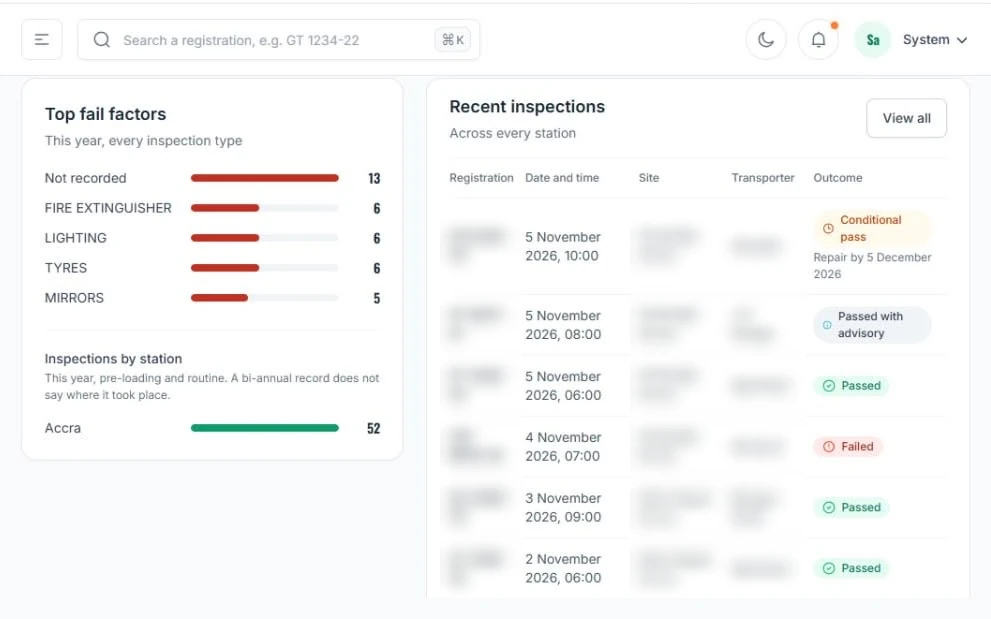
In pilot with a regulated vehicle-testing body in Ghana.
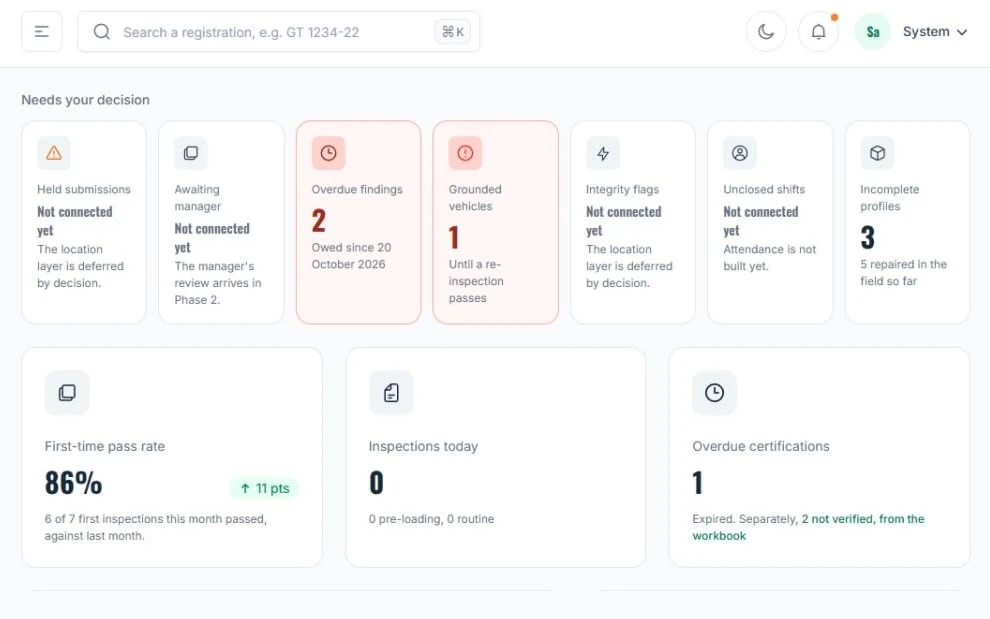
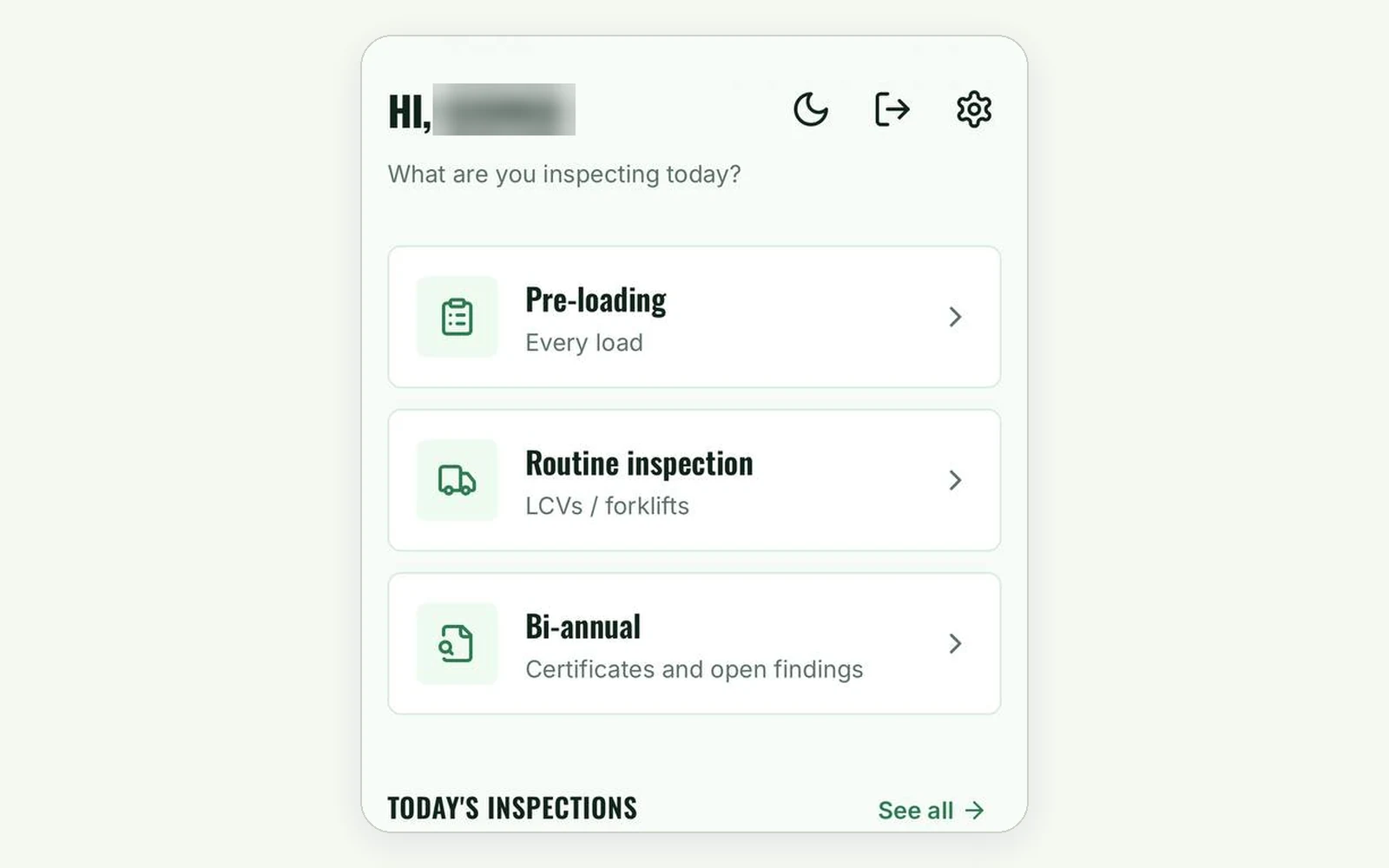
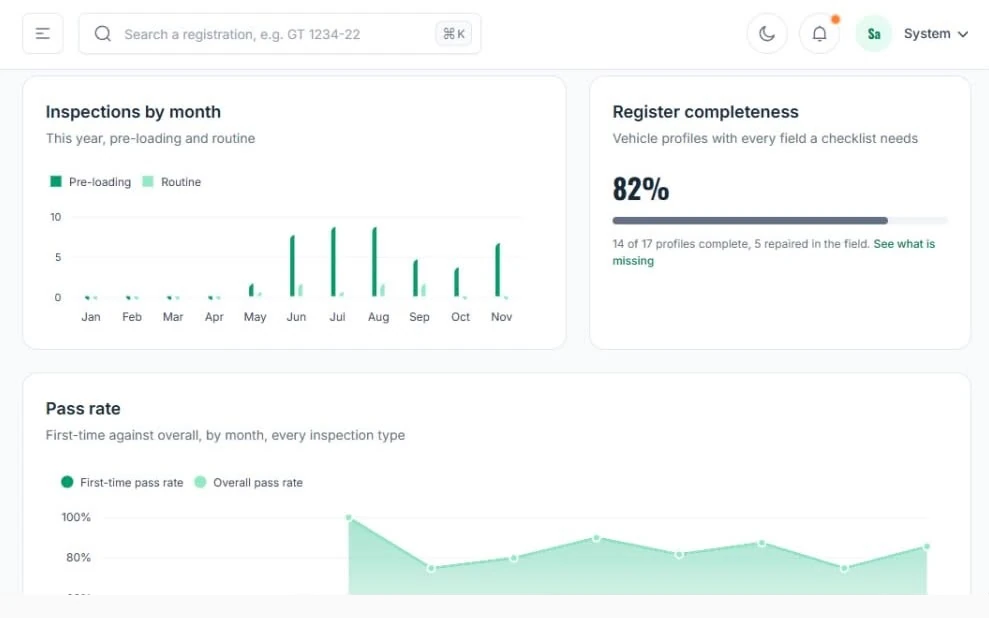
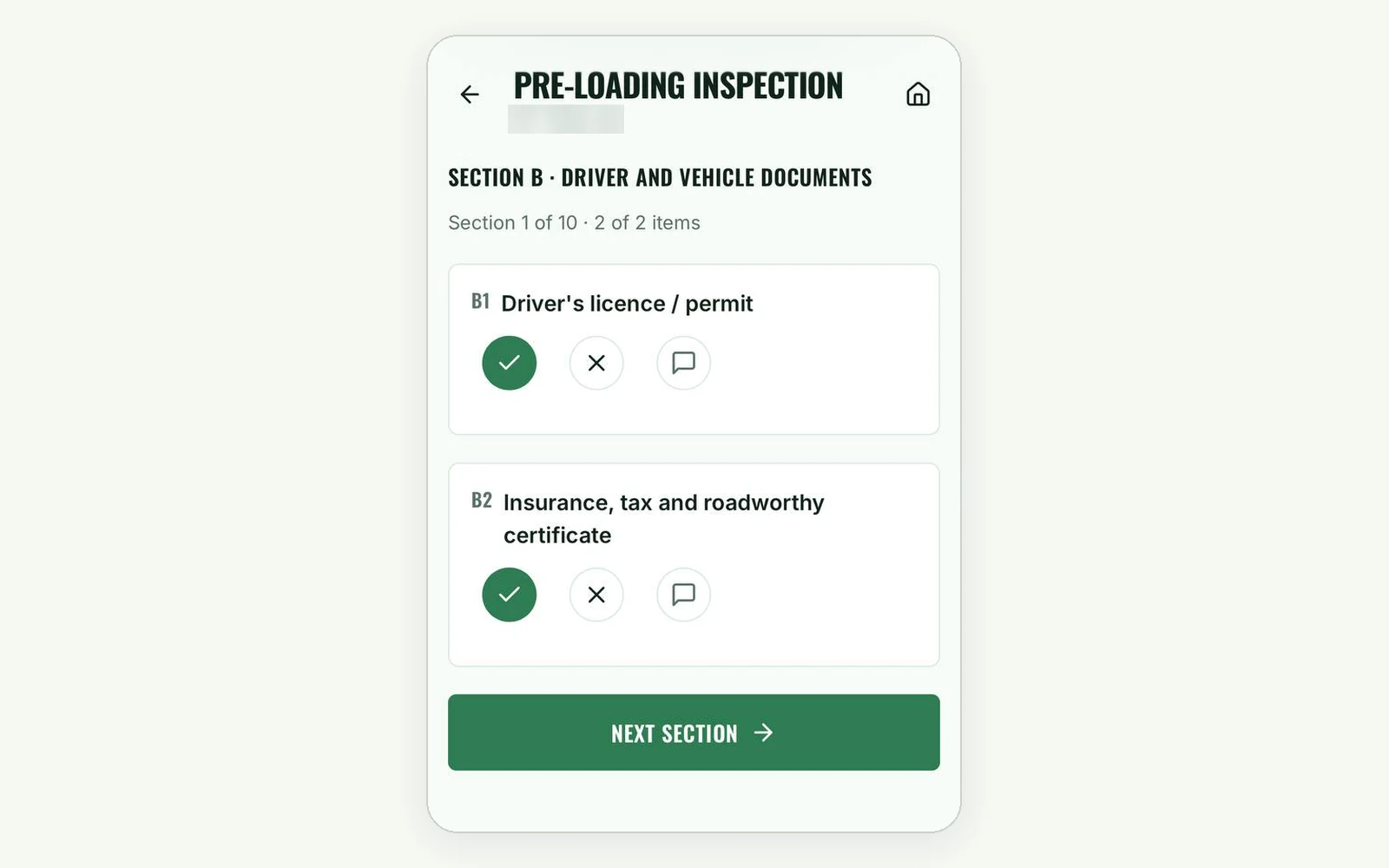
Inspectors log the condition of equipment, machines, structures and tools with photos and ratings on a phone, even without signal. Faults reach supervisors early, and every asset builds a health history.
Checklists are set up to the standards your work is measured against: ASME B30 for lifting gear, API RP 4G and RP 8B for drilling structures and hoisting equipment, API 510, 570 and 653 for vessels, piping and tanks, alongside your own procedures. Your team sets the acceptance limits from its own specifications.
The standard and clause shown on each checklist item, readings checked against your limits, and sign-off only by inspectors holding a current, matching certification.
Catch the gaps before the auditor does.
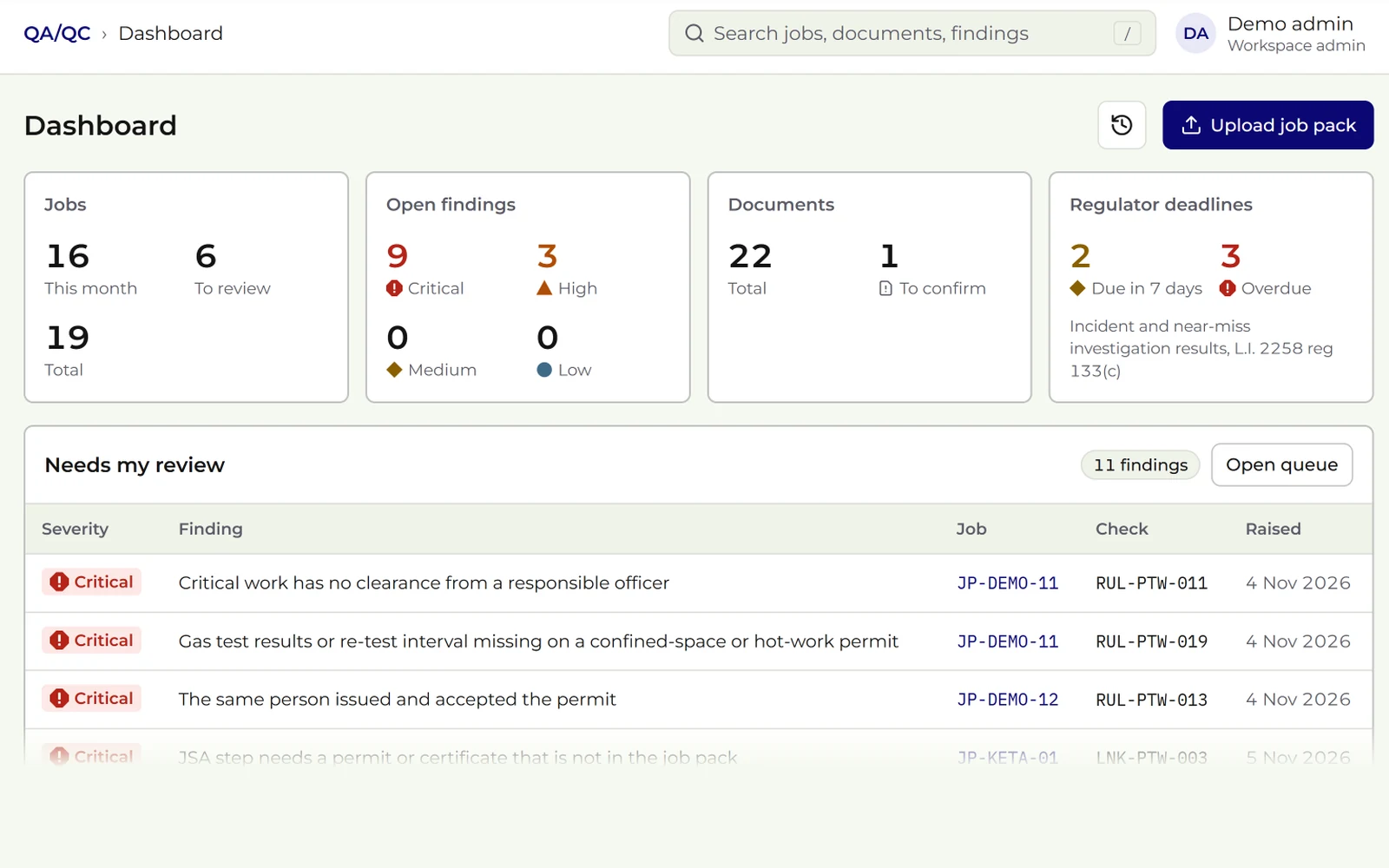
Cross-checks method statements, JSAs, permits and ITPs against each other, against Ghana’s upstream HSE regulations (L.I. 2258) and against the client standards and codes your contract names. It flags gaps, conflicts and missing items with references to the documents involved. A person makes the final call on every finding.
An estimated 5% of a project budget is lost to avoidable errors, roughly GHS 500,000 on a GHS 10 million job.
Checks on welding and fabrication records against ASME BPVC Section IX, AWS D1.1 and ASME B31.3, covering qualified procedures, qualified welders, material certificates, NDT coverage and data book completeness.
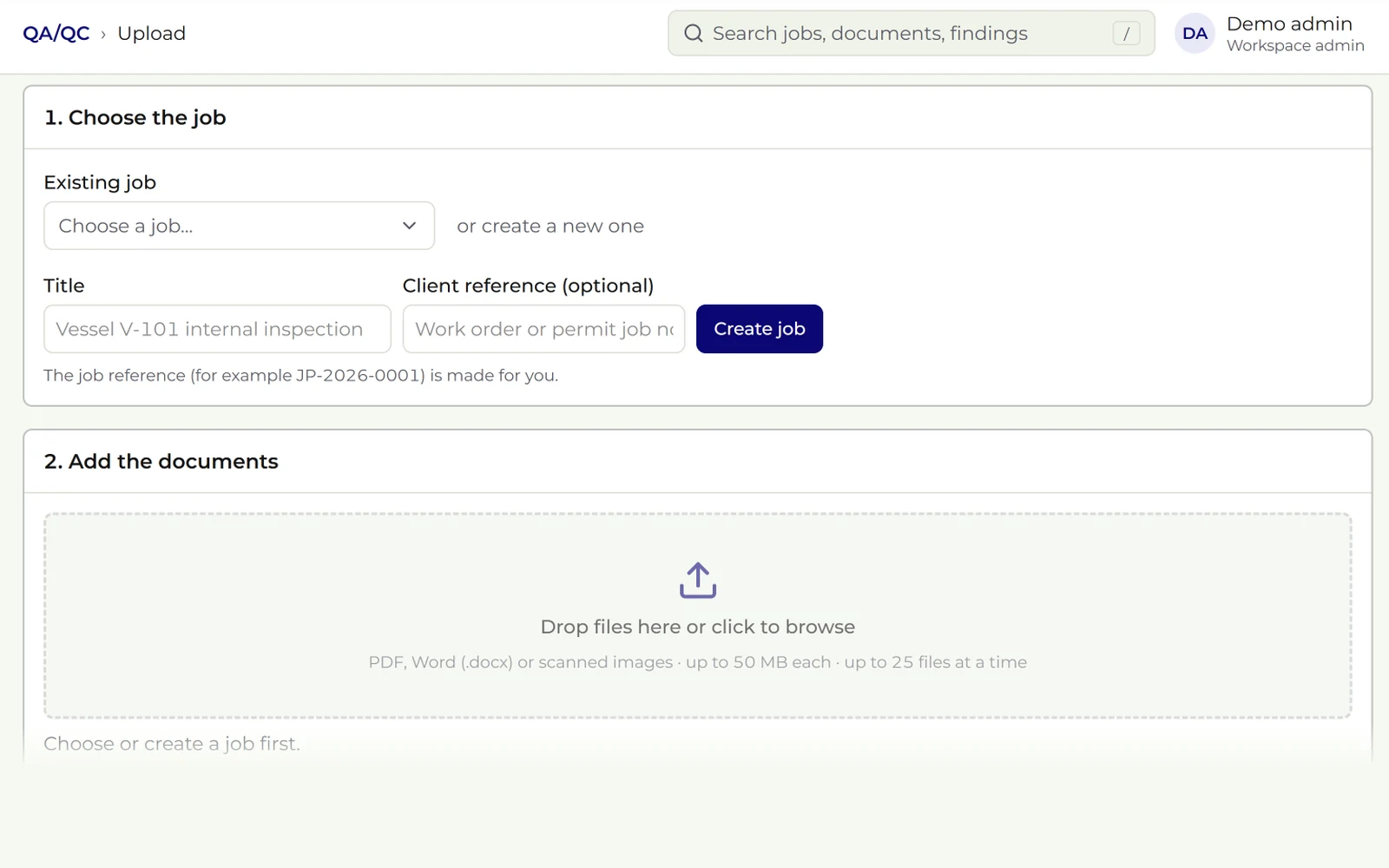
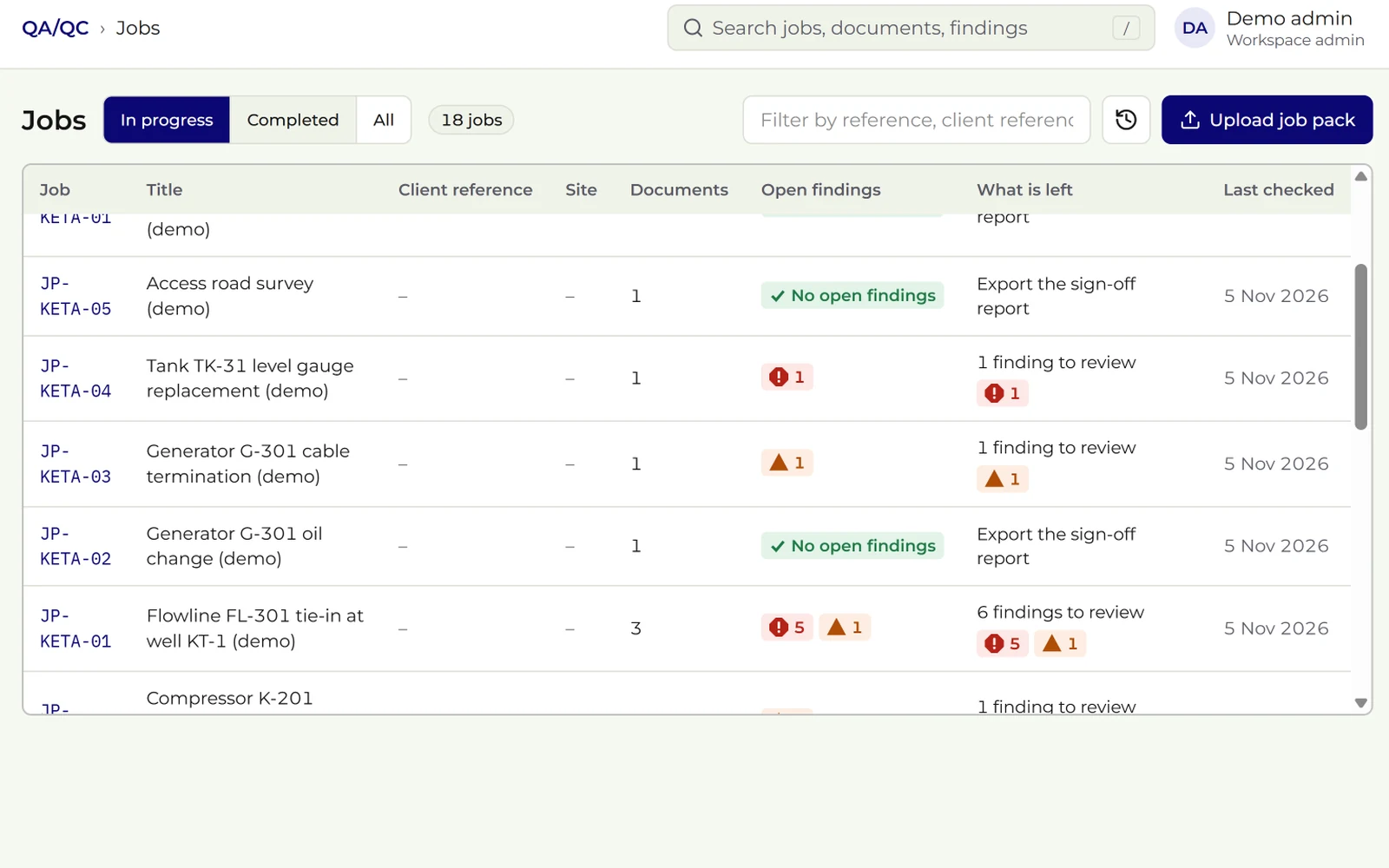
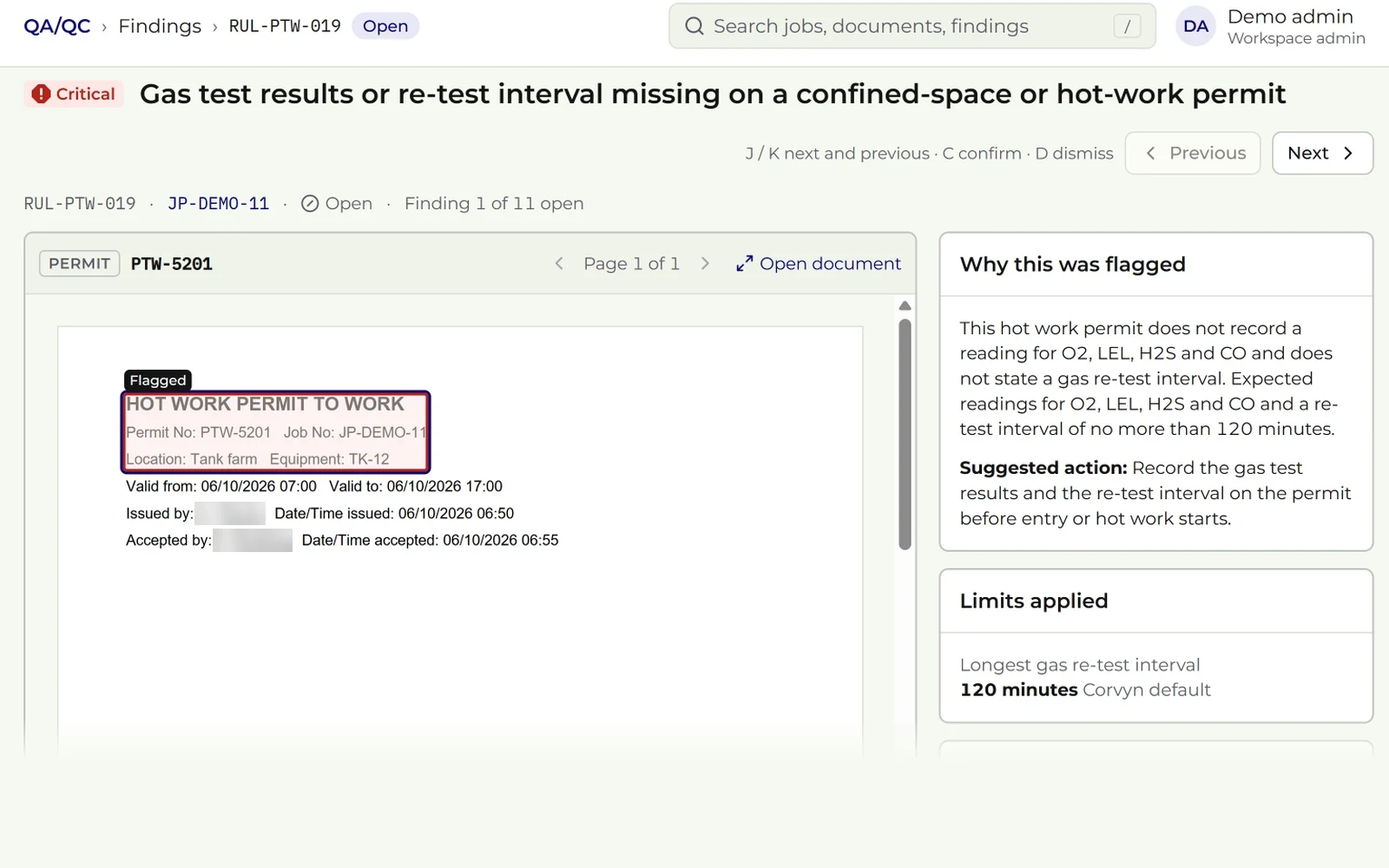
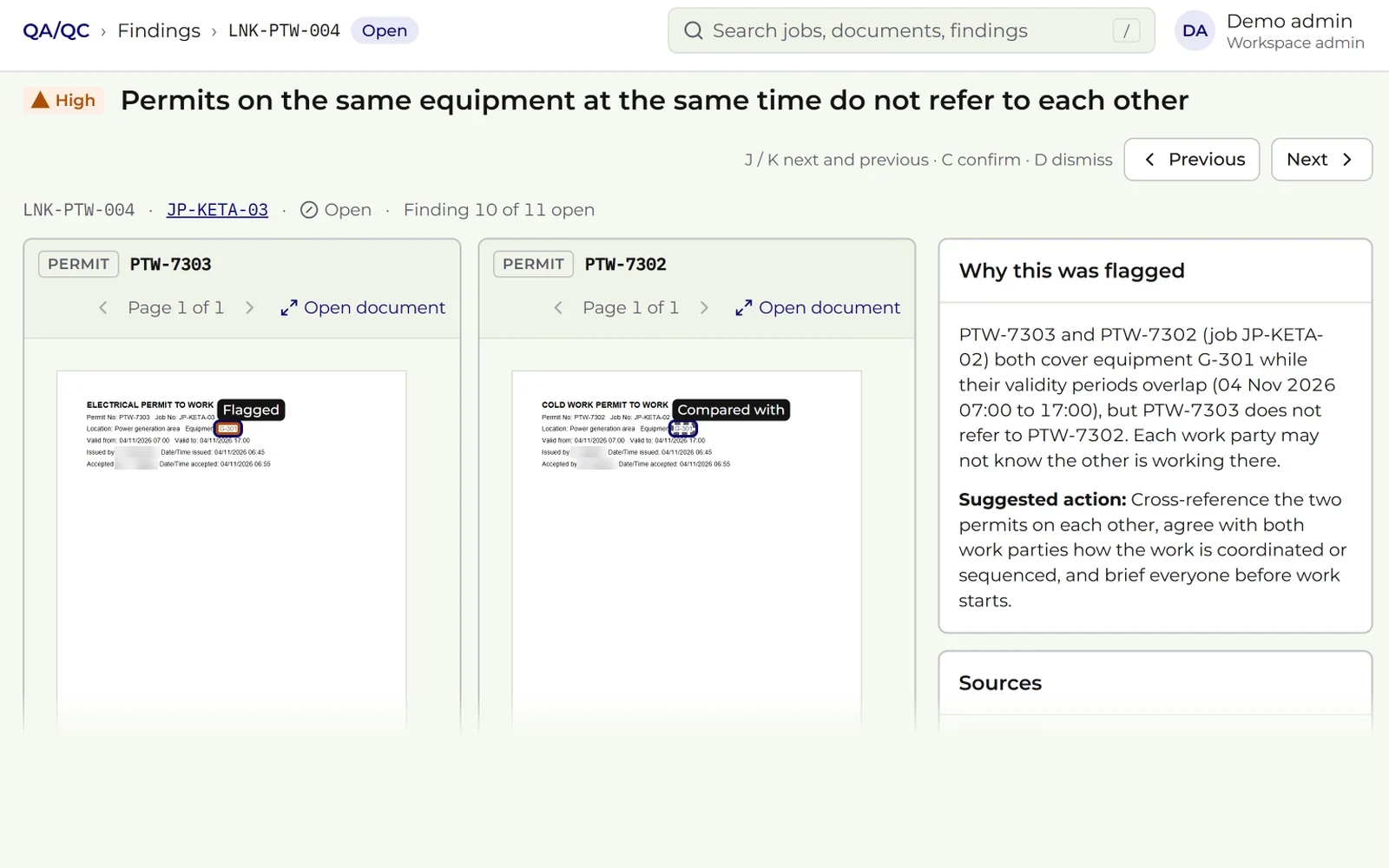
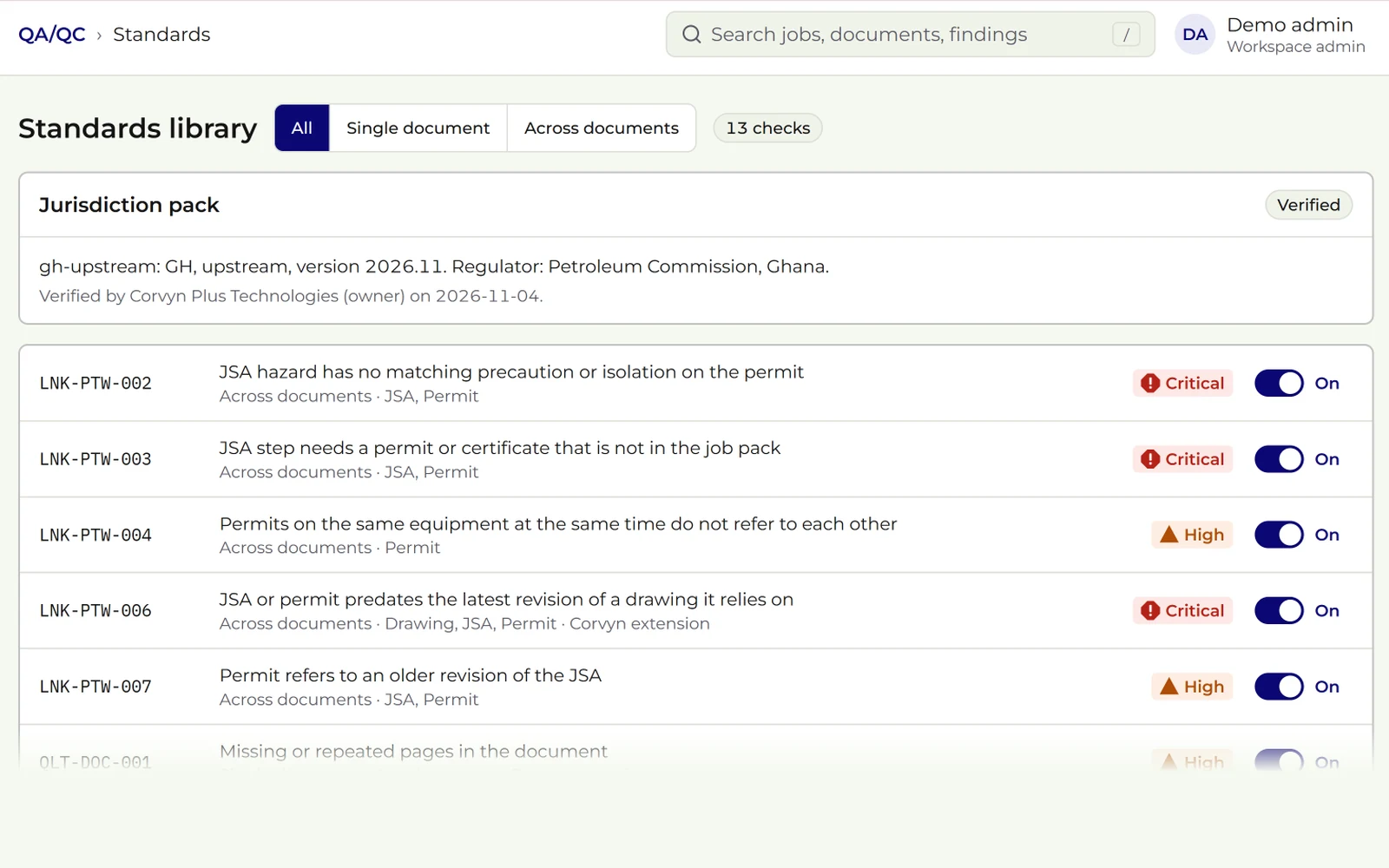
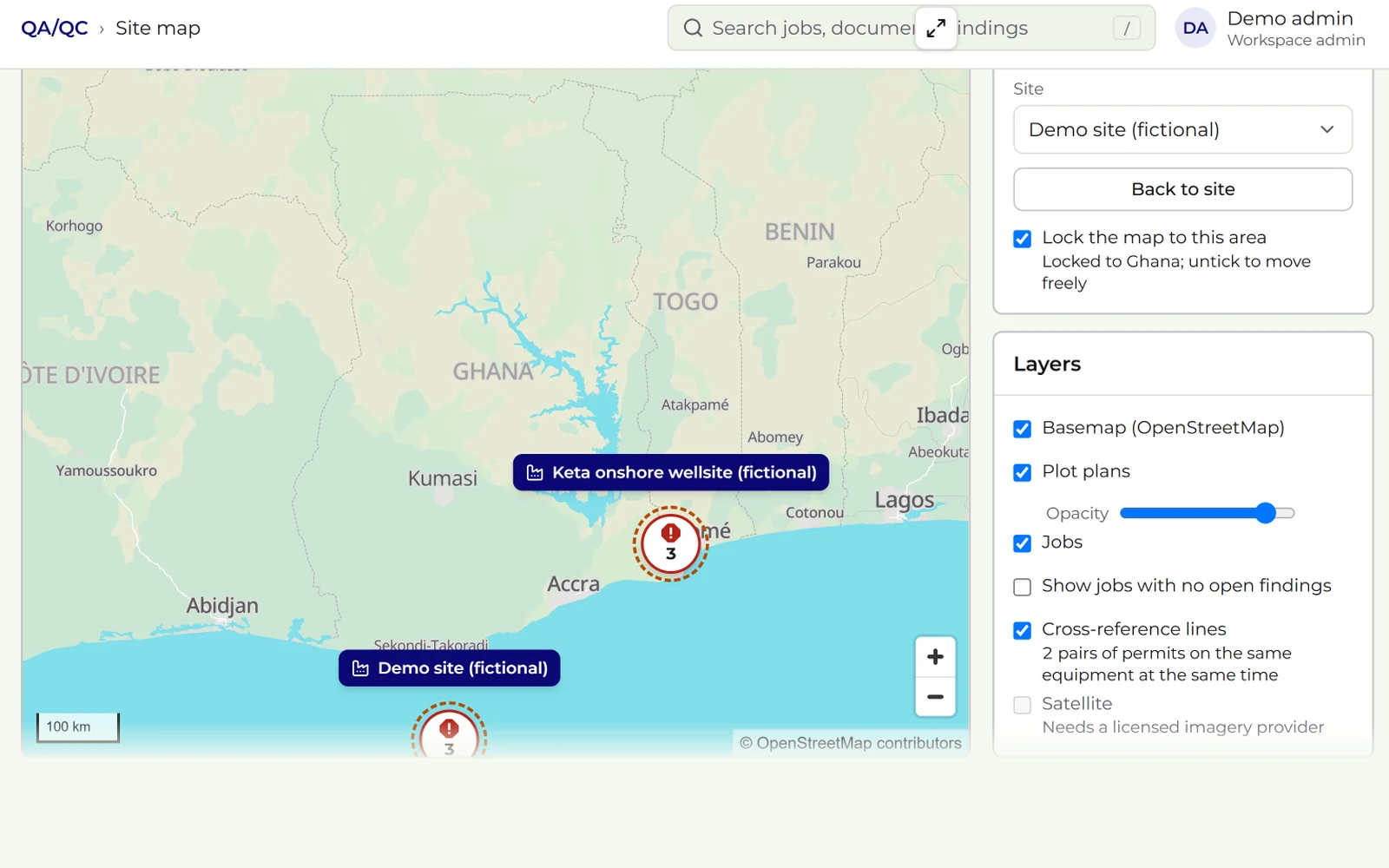
Stage, and who it is deployed with, e.g. “Phase 1, in pilot with …”
Two or three sentences: the problem it replaces, who uses it, and what it produces.
Written down before there was a second company, because the expensive version of that question is the one answered in a hurry.
Standards are configuration too. API, ASME and AWS checklist packs are switched on for each company, and for each project, according to the codes its contract names.
Two companies may reasonably differ on what their sites are called, which items sit on a checklist, or how long a conditional pass lasts. Neither may decide that an unanswered item counts as a pass. A different workflow is engine work, not configuration, and we say which one you are buying before the contract rather than after it.
In oil and gas, contracts are written around American standards: API, ASME and AWS. Our engines carry them, with ISO 9001 and ISO 45001 as the management-system base and Ghana’s own regulations on top.
Our engines refer to these standards; they do not reproduce them and are not certified or approved by the bodies that publish them.